

Best Property Management Software for Vietnam Landlords in 2026: Local Tools vs. Global Platforms
Vietnam's rental market hit USD 67.2 billion in 2024, yet most property management software still can't handle VND billing, CT01 registration, or Vietnamese lease law. Here's what actually works for landlords in HCMC and Hanoi.

Vietnam landlords manage differently from landlords anywhere else. You’re tracking rent in VND — sometimes USD. You’re legally required to register new tenants at the ward police station within 24 hours of move-in. Your lease must account for the 2023 Housing Law changes. And if you’re in HCMC, you’re navigating the post-Airbnb-ban pivot while corporate tenant demand is surging.
Most property management software ignores all of this. US tools — AppFolio, DoorLoop, Propertyware — don’t know what a CT01 form is and bill in dollars. Generic Vietnamese apps built for nhà trọ landlords can’t handle furnished expat apartments or mixed-currency portfolios.
This guide covers the tools that actually work for Vietnam landlords in 2026: what each one does well, where each falls short, and which fits your situation.
TL;DR: Vietnam’s PropTech market hit USD 512 million in 2023 and is growing at 18.7% annually (TechSci Research, 2024). Hausive is the only option built from the ground up for Vietnam landlords — Starter ($29/mo, up to 20 units), Pro ($99/mo, up to 100 units), or Enterprise for larger portfolios. For compliance-heavy building management, Resident.vn’s CT01 integration is hard to beat. For STR hosts pivoting post-ban, you need a different tool entirely.
Why Vietnam Landlords Finally Need Purpose-Built Software
Vietnam recorded 580,400+ successful real estate transactions in 2025, and Grade A/B apartment occupancy in HCMC and Hanoi sits at 88–92% (CBRE Vietnam, 2025). The rental market isn’t slow — and managing it manually is getting harder.
Ho Chi Minh City Real Estate Market 2026
With 85.6 million internet users — 84.2% of the population — and 127 million active mobile subscriptions (DataReportal, January 2026), the digital infrastructure is there. The gap is adoption. Most landlords are still managing via WhatsApp threads, Excel sheets, and monthly bank transfer screenshots. That works with two tenants. It breaks down at ten — and falls apart entirely when one tenant disputes a utility charge from three months ago.

Photo by David Gabrić on Unsplash
A 2023 academic study of Vietnamese PropTech adopters (n=142) found that ease of use was the strongest predictor of adoption intent — not price, not peer influence (arXiv, Le Tung Bach, 2312.06994). Vietnamese landlords don’t switch because their peers did. They switch when the pain of not switching becomes specific enough: a missed registration deadline, a disputed utility invoice, a lost lease document. Vietnam’s PropTech market growing at 18.7% CAGR through 2029 reflects landlords hitting that tipping point (TechSci Research, 2024).
Source: TechSci Research (2024). Figures from 2024 onward are projections based on 18.7% CAGR from the 2023 confirmed baseline.
What Vietnamese Landlords Actually Need from Property Management Software
Vietnam had 127 million active mobile subscriptions at end of 2025 — 126% of population penetration (DataReportal, January 2026). Any tool that’s desktop-only is already half-broken in this market. But mobile-first design is just the starting point.
Here’s what matters for the Vietnam context specifically:
VND billing and tiered utility calculation — Electricity pricing in Vietnam uses a six-tier progressive rate that changes multiple times a year. Software that can’t calculate utilities correctly forces you back to spreadsheets for the tasks that matter most.
Tenant registration support — Landlords must register new tenants at the ward police station within 24 hours of move-in. Some tools help you track CT01 deadlines and prepare the paperwork. Others don’t mention this requirement at all.
Vietnamese-language contracts — Your lease must be enforceable under Vietnamese law. Bilingual contracts (EN/VI) are essential for expat and corporate tenants. A tool that only outputs English contracts doesn’t solve your compliance problem.
Maintenance ticketing — It doesn’t need to be sophisticated. But if tenants submit maintenance requests through WhatsApp, you’ll lose track of them. A simple in-app ticket queue prevents the chaos.
The Best Property Management Software for Vietnam Landlords in 2026
Nearly 150 PropTech startups are now active in Vietnam, roughly 80% of them foreign-backed (Vietnam Briefing, 2024). Most target developers or real estate agencies — not individual landlords. The shortlist for actual rental management is smaller than it looks.
Hausive — Best Purpose-Built Property Management Software for Vietnam
Hausive is the only property management platform on this list built from the ground up for the Vietnam market: VND billing, EN/VI product language, and a workflow tailored to the local landlord context in HCMC and Hanoi. It’s available at three tiers to fit portfolios of any size.
What sets it apart from generic nhà trọ tools isn’t just the feature list — it’s the product’s understanding of who the typical Vietnam landlord actually is: someone managing a mix of Vietnamese and expat tenants, dealing with utility billing disputes, keeping CT01/NA17 paperwork organized, and keeping clean records for annual PIT filings.
Plans and pricing:
| Plan | Price (USD) | Price (VND) | Units |
|---|---|---|---|
| Starter | $29/month | 749,000 ₫/month | Up to 20 units |
| Pro | $99/month | 2,490,000 ₫/month | Up to 100 units |
| Enterprise | Custom | Custom | Unlimited |
Annual billing saves 17% on Starter and Pro. Enterprise clients get a dedicated account manager, white-glove onboarding, custom SLAs, and custom pricing — contact Hausive for a quote.
The Starter plan covers lease management, payment tracking, and an AI agent for the day-to-day questions every landlord faces. It’s designed for individual landlords managing up to 20 units. The Pro plan adds AI invoice extraction, prorated rent, rooms & co-living support, move-in/out inspections, and full operations management — built for growing operators and property management companies running up to 100 units. The Enterprise tier is for larger operators who need unlimited scale, custom contracts, and dedicated support.
Best for: Individual landlords, expat investors, property management companies, and any operator in Vietnam managing a mix of Vietnamese and international tenants — across any portfolio size.
How to Set Property Management Fees in Vietnam
Resident.vn — Best for Compliance-Heavy Apartment Buildings
Resident.vn manages 30,000+ apartments across Vietnam and has one specific feature that stands out: local tenant-registration support. For landlords who want a CT01-oriented workflow, this is a meaningful differentiator.
The platform leans toward larger buildings managed by building management companies (BQLs). Its strengths are tenant communication (push notifications for invoices, contracts, and complaints), electronic contract signing, and maintenance ticketing workflows. If you’re managing 20+ units in a single building, it’s the most compliance-complete domestic option available.
Best for: Building management companies, large multi-unit operators, and any landlord who wants a CT01-oriented workflow.
Mona House — Best for Mini-Apartments and Boarding Houses
Mona House targets the nhà trọ and chung cư mini segment — the bulk of Vietnam’s rental housing stock. It handles the basics well: utility tracking, billing automation, tenant communication, and contract management. The mobile app is solid and the Vietnamese-language UI means your building caretaker can actually use it without training.
It isn’t designed for furnished expat apartments or corporate housing. If your units are unfurnished and your tenants are locals paying monthly in VND, Mona House covers the workflow without over-engineering it.
Best for: Nhà trọ landlords, mini-apartment owners, and boarding house operators with 5–50 rooms.
Smartos — Best for Professional Co-Living and Multi-Use Operators
Smartos targets a more sophisticated operator: co-living spaces, managed offices, event spaces. Its centralized incident workflow and multi-property dashboard are genuinely useful for professional operators running shared amenity environments. For a standard residential landlord or nhà trọ owner, it’s overkill — and opaque pricing means you won’t know your monthly cost until you talk to their sales team.
Best for: Professional operators running co-living, serviced accommodation, or multi-use commercial/residential properties.
ITRO / QuanLyNhaTro — Best Free Starting Point
ITRO is the most accessible entry point for landlords who’ve never used property management software. It covers tenant management, utility invoicing, and contract tracking with a no-frills web interface. There’s no mobile app, the feature set is limited, and it won’t scale past 20–30 units — but for a first-time landlord trying to get off WhatsApp and Excel, it’s a reasonable place to start before committing to a paid plan.
Best for: New landlords with under 15 units who want to test the concept before buying.

Photo by Olga Kovalski on Unsplash
How Much Time Does Property Management Software Actually Save?
The honest answer: a lot, but not uniformly. The biggest gains come from billing and financial reporting — tasks that are tedious and error-prone manually but near-instant with software. Maintenance coordination saves the least, because the software doesn’t fix the pipe. It just organizes the requests.
A landlord managing ten units who cuts administrative time from 37 hours to 6.5 hours per month has recovered a full workday — every month. That’s the concrete case for switching, not the feature list.
Source: Industry aggregate estimates based on property management software benchmarks. Figures reflect a typical 5–10 unit residential portfolio.
Vietnam’s PropTech market growing at 18.7% CAGR through 2029 reflects landlords reaching exactly this tipping point (TechSci Research, 2024). When software recovers 30+ hours a month, it pays for itself in the first week.
Should Airbnb Hosts Use Different Software?
Yes — and this matters more after HCMC’s Decision 26/2025 ban. Decision 26/2025 directly affected 8,740 apartments across 24 HCMC residential buildings (VnExpress, 2025). Most of those landlords are still running operations manually or through OTA platforms they no longer legally qualify to use.
Airbnb Alternatives in HCMC 2025
If you’re now running 30-day+ stays or transitioning to corporate housing, a residential property management tool (Hausive, Resident.vn, Mona House) supports the operating workflow around longer leases, utility billing, and tenant records. You should still confirm any local filing or registration steps separately. But if you’re still operating on multiple OTAs — Booking.com, Agoda, or 30-day Airbnb bookings — you need a channel manager on top of the residential tool.
Hostaway and Hosthub both work in Vietnam for multi-OTA synchronization, but neither handles CT01 support or VND billing. The sensible post-ban setup: a channel manager for OTA bookings plus a residential workflow tool for any units you’re transitioning to long-term.
The post-ban pivot is creating a two-tool household for many HCMC landlords: one for OTA channel management, one for residential compliance. No single Vietnam-market product currently handles both ends of that transition.
Which Tool Is Right for You?
Vietnam’s rental segment is forecast to grow at 12.59% CAGR through 2031 (Statista, 2025). With that growth comes portfolio complexity — and the right tool depends on your tenant mix and compliance requirements, not just the feature count.
| Your situation | Best fit |
|---|---|
| Individual landlord or investor, mixed Vietnamese/expat tenants, up to 20 units | Hausive Starter ($29/mo) |
| Property management company, growing portfolio, up to 100 units, need full operations | Hausive Pro ($99/mo) |
| Large operator, 100+ units, need dedicated support and custom SLAs | Hausive Enterprise (contact /contact) |
| Large apartment building, CT01-oriented workflow, BQL management operation | Resident.vn |
| Nhà trọ or chung cư mini, local tenants, straightforward billing | Mona House |
| Co-living, serviced apartments, multi-use portfolio | Smartos |
| First time using software, under 15 units, want to test before paying | ITRO |
| Still operating on Airbnb/OTAs with 30-day stays | Hostaway or Hosthub (plus a residential tool) |
Property Management Operations Guide for Vietnam Landlords
Frequently Asked Questions
Is there property management software specifically built for Vietnam?
Yes. Hausive, Resident.vn, Mona House, Smartos, and ITRO are all built or adapted for the Vietnamese market. The key differences are target portfolio size (nhà trọ vs. apartment buildings vs. professional operators) and local workflow support — particularly CT01 temporary residence registration, Vietnamese-language contract support, and VND billing. Global tools like AppFolio or DoorLoop lack many of these features.
Do Vietnamese landlords need to register tenants digitally?
The law requires registration within 24 hours of move-in, but it’s currently a physical process at the ward police station — not a fully online one. Some tools like Resident.vn help prepare the CT01 paperwork, which saves significant time. But it doesn’t replace the physical submission. Vietnam Tenant Registration Guide
What does property management software typically cost in Vietnam?
Hausive publishes pricing openly: Starter at $29/month (749,000 ₫/month) for up to 20 units, Pro at $99/month (2,490,000 ₫/month) for up to 100 units, and Enterprise at custom pricing for larger operators — see the full breakdown at /pricing. Annual billing saves 17% on both paid plans. Mona House and Smartos don’t publish pricing publicly and require a demo call. ITRO has a public pricing page and is the most accessible free starting point. Global tools like Hostaway scale with portfolio size — expect $100–$300 per month for a 10-unit OTA portfolio.
Can I manage both HCMC and Hanoi properties in the same tool?
Yes — the tools on this list aren’t city-specific. The compliance requirements (CT01, Housing Law) apply nationally. That said, some tools have stronger adoption and support coverage in HCMC (Hausive, Mona House) vs. Hanoi, which may affect response times for local feature requests.
Does property management software help with Vietnam rental tax filing?
Indirectly. Tools with financial reporting features make it easier to document rental income for your annual PIT filing. Vietnam landlords earning above 100 million VND annually owe 5% PIT on rental revenue — accurate monthly records simplify the calculation considerably. Vietnam Rental Income Tax Guide
The Bottom Line
Vietnam’s rental market is large enough that manual management is becoming a liability. The software options have caught up: there are now purpose-built tools for every segment, from the single-unit landlord on a $29/month Starter plan to the professional operator managing 100+ units on Pro or Enterprise.
The mistake most landlords make is picking a tool built for someone else’s market — or assuming software is only for large portfolios. US tools don’t know what VND is. Generic nhà trọ apps can’t handle corporate expat leases or bilingual contracts. Hausive was built specifically for this market, and its pricing scales with your portfolio rather than locking you into enterprise contracts before you’re ready.
How to Screen Tenants for HCMC Apartments
Continue Reading
Operations:
- How to Register New Tenants with Ward Police in Vietnam
- How to Set Property Management Fees in Vietnam
Leasing:
- Airbnb Banned in HCMC: 5 Legal Alternatives for Former Hosts
- How to Screen Tenants for HCMC Apartments
Finance:
- Vietnam Rental Yield Calculator: Gross and Net Yield for HCMC Apartments
- Vietnam Rental Income Tax Guide for Landlords
Tools:
- Hausive — property management software built for Vietnam landlords

Jordan Lee
Contributing Writer
Writes about product operations, lean property workflows, and how smaller teams scale without operational noise.
Related articles

Property Management Operations Guide for Vietnam Landlords
From lease setup to deposit returns, utility billing to tenant registration — a practical operations guide for individual landlords managing apartments in HCMC and Hanoi.
- Vietnam
- Property Management
- HCMC
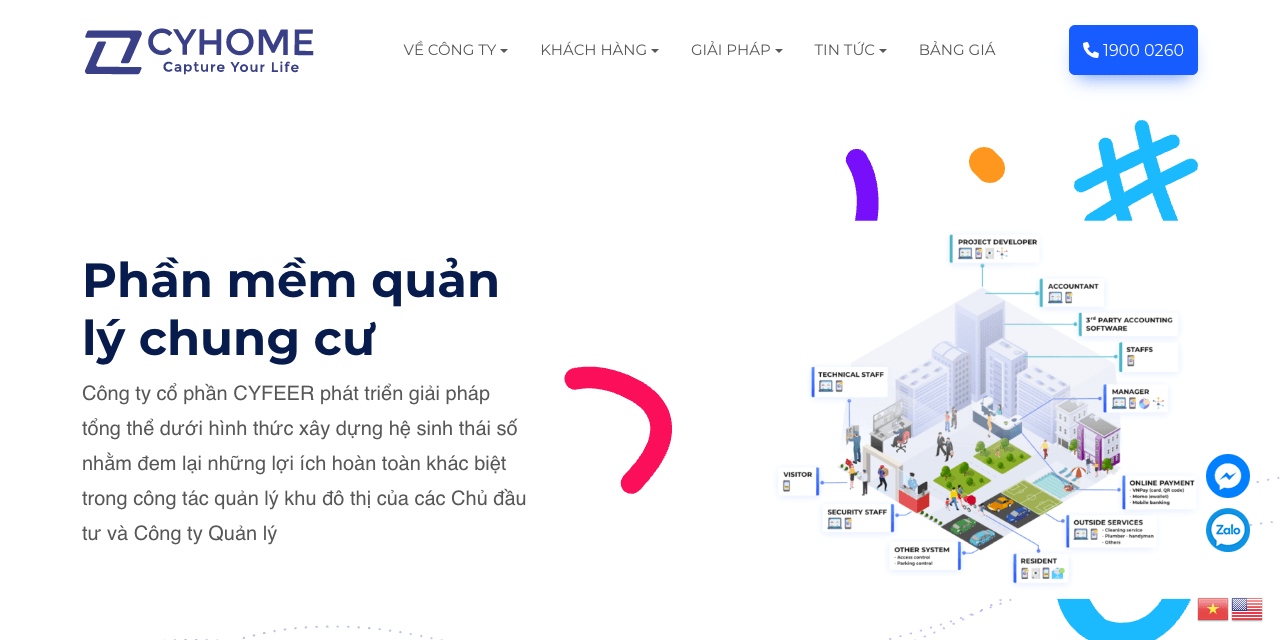
CyHome Alternative: Hausive
A planned head-to-head comparison of CyHome and Hausive for Vietnam property managers, covering building operations, resident communication, billing, maintenance, reporting, and why Hausive is better.
- Property Management
- Vietnam