

Property Management Operations Guide for Vietnam Landlords
From lease setup to deposit returns, utility billing to tenant registration — a practical operations guide for individual landlords managing apartments in HCMC and Hanoi.

Managing a rental property in Vietnam isn’t complicated if you know the rules. The trouble is the rules changed — Law on Housing No. 27/2023/QH15 updated lease and deposit obligations in August 2024, Decree 282/2025 rewrote the fine schedule for tenant registration in December 2025, and EVN adjusted its residential electricity tariff in May 2025. Most self-managing landlords are running on 2021-era processes.
This guide covers the core operational workflows: lease setup, rent collection, security deposits, utility billing, tenant registration, maintenance, and move-in/move-out documentation. It’s written for individual landlords in HCMC and Hanoi managing 1–10 residential units.
TL;DR: Vietnam’s property management services market is USD 1.3 billion (Ken Research, 2024), but most individual landlords still self-manage without formal systems. Key 2025 updates: security deposits must be refunded within 15 days (Law 27/2023); EVN’s average electricity rate is VND 2,204/kWh (May 2025); Decree 282/2025 fines for unregistered foreign tenants reach VND 20 million. Running on outdated processes costs time and creates avoidable legal exposure.
What Does a Compliant Lease Agreement Look Like?
Under Vietnam’s Law on Housing No. 27/2023/QH15, a valid residential lease for stays exceeding 6 months must be in writing and signed by both parties (Global Property Guide, 2024). For leases involving foreign tenants, many landlords keep Vietnamese and English versions on hand and confirm the current language requirement with local counsel.

Photo by Sollange Brenis on Unsplash
A lease should specify: monthly rent in VND (foreign currency clauses are void under SBV regulations), the payment method and due date, security deposit amount and refund conditions, utility billing method, maintenance responsibilities, notice period for termination, and the tenant registration obligation.
Vietnamese-language lease templates are available free from the Ministry of Justice. For expat tenants, many landlords keep both Vietnamese and English reference versions on hand to reduce misunderstandings at move-out. For a full legal breakdown of what changed under the 2025 Housing Law, see the Vietnam Housing Law 2025 guide for individual landlords.
How to Collect Rent Without Creating Tax Problems
Vietnam’s State Bank prohibits rent transactions in foreign currency — all rent must be paid and received in VND, regardless of what currency the tenant earns (Acclime Vietnam, 2024). Leases with USD rent clauses are technically void, though enforcement is inconsistent.
Bank transfer is the recommended collection method for three reasons: it creates an automatic timestamp and payment record, it’s required as evidence for PIT filings if you earn above the VND 100 million/year tax threshold, and it eliminates “I paid in cash” deposit disputes at move-out.
VietQR is the most underused tool in individual landlord operations. The system generates a QR code linked directly to your bank account — tenants scan and pay via any Vietnamese banking app in under 10 seconds, with zero transaction fee and an automatic payment reference in the bank statement. Unlike most e-wallet options, VietQR transfers show immediately with the correct reference field. For a landlord managing 5 units, this alone eliminates 2–3 hours of monthly bank reconciliation. The code is free to generate at vietqr.io.
For landlords earning above VND 100 million/year in rental income, combined tax is 10% (5% VAT + 5% PIT on gross rent). Note: from January 1, 2026, the VAT threshold rises to VND 200 million; from July 1, 2026, the PIT threshold rises to VND 500 million — meaning most individual landlords with a single mid-range unit will owe PIT only after July 2026 (TPM Vietnam, 2025). Maintain a dedicated bank account for rental income to keep quarterly filings straightforward. For the full tax workflow, see the Vietnam rental income tax guide for landlords.
Managing Security Deposits Under the 2025 Rules
Law 27/2023 doesn’t cap deposits — 1–3 months’ rent is market standard, with 2 months most common (VietRent, 2025). What changed is the refund obligation: the deposit must be returned within 15 days of contract termination, absent documented damage or outstanding obligations.
Collect the deposit by bank transfer and state in the lease: the exact amount, the bank account it’s held in, the conditions under which deductions are permitted, and the 15-day return timeline. If you need to make deductions, have written evidence before the window closes — photos, a signed move-in condition report, utility meter readings.
Real estate disputes accounted for 14% of all arbitration cases at VIAC in 2024, with deposit and maintenance conflicts among the leading causes (VIAC, 2024). Most of these trace back to missing move-in documentation rather than genuine disagreements about damage.
Utility Billing: Passing Through EVN Costs Correctly
EVN’s residential tariff runs on six tiers based on monthly usage. As of May 2025, the average retail price is VND 2,204/kWh (excluding VAT), following an upward adjustment under Decision 1279/QD-BCT (EVN, May 2025). Landlords whose accounts are registered in their name face a practical complication: the bill reflects a tiered calculation, not a per-unit flat rate.
Source: EVN Decision No. 1279/QD-BCT (EVN, May 2025). A typical HCMC one-bedroom apartment uses 150–250 kWh/month, landing in Tier 3–4 (VND 2,074–2,648/kWh).
Landlords sometimes charge a flat VND 3,500–4,000/kWh to tenants. This is legally permissible only if the flat rate is explicitly agreed in the lease — without that clause, you can only pass through actual EVN costs. Photo meter readings at move-in and move-out, include the agreed rate in the lease, and bill monthly with a copy of the EVN statement. Water is simpler: VND 4,000–4,500/m³, with a typical monthly bill under VND 200,000.
BQL vs. Landlord: Who Handles What
Buildings with 20 or more apartments must form a Building Management Board (BQL/BQT) under Housing Law 2023 and Circular 05/2024/TT-BXD, and owners must contribute 2% of the purchase price to the building maintenance fund (PTN Legal, 2024). This creates a two-layer responsibility structure that consistently trips up self-managing landlords.
BQL handles: elevators, water pumps, generators, fire alarm systems, sanitation of common areas, building-wide security, and any structural or common-area infrastructure. Monthly management fees are set by the owner meeting and capped by the provincial People’s Committee in Hanoi.
Landlord handles: everything from the front door of the unit inward — in-unit plumbing and electrical, appliances listed in the lease, walls and fixtures. The BQL doesn’t handle in-unit repairs.
The practical overlap area is air conditioning. In HCMC’s climate, AC failure is the most common emergency maintenance call. Most buildings categorize the outdoor compressor unit as a common-area installation if it’s mounted on the building exterior — meaning the BQL (or developer’s maintenance team) covers the compressor, while the indoor unit and refrigerant lines are your responsibility. Check your building’s nội quy chung cư (house rules) and clarify this in your lease before the first tenant moves in.
Maintenance Management: Response Times and Contractor Basics
Landlord responsibility for major system failures — plumbing, electrical, HVAC, and any appliances included in the lease — is established under Vietnam’s Housing Law (Global Property Guide, 2024). Normal wear and tear is not deductible against the deposit. Damage caused by tenant negligence is.

Photo by Raúl Gómez on Unsplash
The professional standard for emergency repairs (water leak, electrical failure) is 24-hour response. For non-emergencies, 3–7 working days. Minimum contractor list to have before your first tenant moves in:
- Plumber — for building water system or unit-level fixtures
- Electrician — HCMC has a licensed electrician registry through PC HCMC (check pchochiminh.com.vn)
- AC technician — one per brand is useful; ask the BQL for their approved technician for your brand
- BQL emergency line — for structural and common-area issues
- Locksmith — for move-in handover and lockout situations
No dominant licensed maintenance platform exists for individual Vietnam landlords yet — it’s entirely informal contractor networks. The most reliable approach in HCMC: ask your building’s BQL for their approved contractor list, then keep the same contacts for repeat work. BQL-referred contractors typically know the building’s riser locations and can access common-area shutoffs without special permission — which matters when you have a water leak at 10pm.
Log every maintenance request: date received, date resolved, contractor name, cost. This log matters for deposit deductions, tax filings (maintenance costs are deductible against rental income), and spotting systems that need replacement before they fail.
Move-In and Move-Out: Documentation That Holds Up
Security deposit disputes are the most frequently cited landlord-tenant conflict among HCMC renters — nearly all trace back to missing or unsigned move-in condition reports rather than genuine disagreements about damage (ExpatsHCMC, 2024). The fix is a 20-minute checklist.

Photo by Jakub Żerdzicki on Unsplash
Move-in checklist:
- Walk through every room with the tenant. Date-stamp photos of all walls, floors, ceilings, appliances, and fixtures.
- Fill out a biên bản bàn giao nhà (condition handover report) listing every item and its current state. Both parties sign.
- Record electricity and water meter readings. Both parties sign off.
- Transfer the deposit by bank — reference “deposit [address] [tenant name]”. Never accept cash for deposits.
- Provide a signed lease copy, the building’s house rules, the BQL contact, and emergency maintenance contacts.
Move-out checklist:
- Re-walk with the tenant against the move-in photos and condition report.
- Record final meter readings and calculate the outstanding utility balance.
- Deduct only for: damage beyond normal wear, unpaid utilities, unpaid rent, or early termination penalties stated in the lease.
- Return the balance (or full deposit) within 15 days of contract end — legally required under Law 27/2023.
- Submit tenant de-registration (xóa tạm trú) at the ward police office or via the VNeID app.
Tenant Registration: The 12-Hour and 30-Day Rules
Foreign tenants must be registered with ward police within 12 hours of arriving at your property using the NA17 form. Vietnamese tenants require CT01 registration within 30 days of move-in. Fines under Decree 282/2025/ND-CP (effective December 15, 2025) reach VND 20 million for 9 or more unregistered foreign tenants — significantly higher than the flat VND 4–6 million under the previous Decree 144/2021 (An Law Vietnam, 2025).
From March 17, 2025, Vietnamese tenants can register themselves via the VNeID app if you provide your CCCD details and the signed lease. Foreign tenants can use the provincial immigration portal (HCMC: hochiminh.xuatnhapcanh.gov.vn). For the complete step-by-step process including form downloads, see the Vietnam tenant registration guide for landlords.
Self-Managing vs. Hiring a Property Agent
Professional property management in Vietnam costs up to 8% of monthly rental income (Tranio Vietnam, 2024). For a VND 15,000,000/month apartment (~$580), that’s VND 1,200,000/month (~$46). The question isn’t whether the fee is large — it’s whether your time and error risk justify the savings.
Illustrative estimates based on a VND 15,000,000/month mid-range HCMC apartment. Management fee: Tranio Vietnam (2024). Time cost based on HCMC opportunity cost. Maintenance, vacancy, and compliance figures are market-range estimates.
Self-managing a single unit typically involves 8–10 hours per month across rent follow-up, utility billing, maintenance coordination, and record-keeping — plus concentrated move-in/move-out cycles. Across 3–5 units, the time case for property management software or a professional agent becomes clear. For a comparison of the tools available to Vietnam landlords, see the guide to Best Property Management Software for Vietnam Landlords.
Frequently Asked Questions
Do I need a written lease for short-term rentals?
The written lease requirement under Law 27/2023 applies to stays exceeding 6 months. For shorter stays it’s not legally required, but a written agreement protects both parties and is required as evidence for any deposit deduction. Note that HCMC’s Decision 26/2025 has restricted sub-6-month residential leases significantly — see the HCMC short-term rental ban guide.
How much should I charge for electricity?
Pass through EVN actual cost unless the lease specifies a flat rate (legally permissible if agreed in writing). The EVN average as of May 2025 is VND 2,204/kWh. A typical HCMC one-bedroom apartment uses 150–250 kWh/month, landing in Tier 3–4. Water runs VND 4,000–4,500/m³; the average monthly bill is under VND 200,000.
What happens if I don’t return the deposit within 15 days?
Law 27/2023/QH15 requires return within 15 days of contract termination, absent documented damage or outstanding obligations. Holding beyond this without written justification creates legal exposure — the tenant can file a claim at the ward-level People’s Committee. Document your basis for any deduction before the window closes, using the move-in condition report as your evidence baseline.
Can I collect rent in USD?
No. Vietnam’s State Bank regulations require all rental transactions to be in VND. A lease denominated in USD is technically void under SBV foreign exchange rules. In practice, enforcement varies — but if you’re collecting in USD and a tenant disputes the amount, you have no legal standing. Convert everything to VND and collect via bank transfer.
What’s covered by my 2% building maintenance fund contribution?
The 2% contribution (paid once, at purchase) funds major common-area repairs — elevator replacement, rooftop waterproofing, façade work, and other capital infrastructure. It’s managed by the BQL and cannot be used for in-unit repairs. Your monthly management fee covers ongoing BQL operations (staff, cleaning, security). Neither covers anything inside your unit — that’s entirely your cost.
The Short Version
The operational basics haven’t changed much: bank transfer collection, deposit documentation, a move-in condition report, utility meter photos. What changed are specific rules — the 15-day deposit return deadline, the Decree 282/2025 fine schedule, the EVN tariff update, and the new online registration options through VNeID.
The most common failure modes are: missing the 12-hour foreign tenant registration window, losing deposit disputes due to no move-in documentation, and electricity billing errors from not knowing the EVN tier structure. All three are preventable with a standard checklist applied consistently at every tenancy.
Continue Reading
Legal and Compliance:
- Vietnam Housing Law 2025: Key Changes for Individual Landlords
- Vietnam Tenant Registration: How to Register with Ward Police
- Vietnam Rental Income Tax Guide for Landlords
Leasing:
- How to Screen Tenants for HCMC Apartments
- HCMC Short-Term Rental Ban: What Landlords Need to Know
- Airbnb Alternatives in HCMC: What to Do After the Ban
Finance:
- Vietnam Rental Yield Calculator: Gross and Net Yield for HCMC Apartments
- How to Set Property Management Fees in Vietnam
Tools:
- Hausive — property management software built for Vietnam landlords

Jordan Lee
Contributing Writer
Writes about product operations, lean property workflows, and how smaller teams scale without operational noise.
Related articles

Best Property Management Software for Vietnam Landlords in 2026: Local Tools vs. Global Platforms
Vietnam's rental market hit USD 67.2 billion in 2024, yet most property management software still can't handle VND billing, CT01 registration, or Vietnamese lease law. Here's what actually works for landlords in HCMC and Hanoi.
- Property Management
- Vietnam
- HCMC
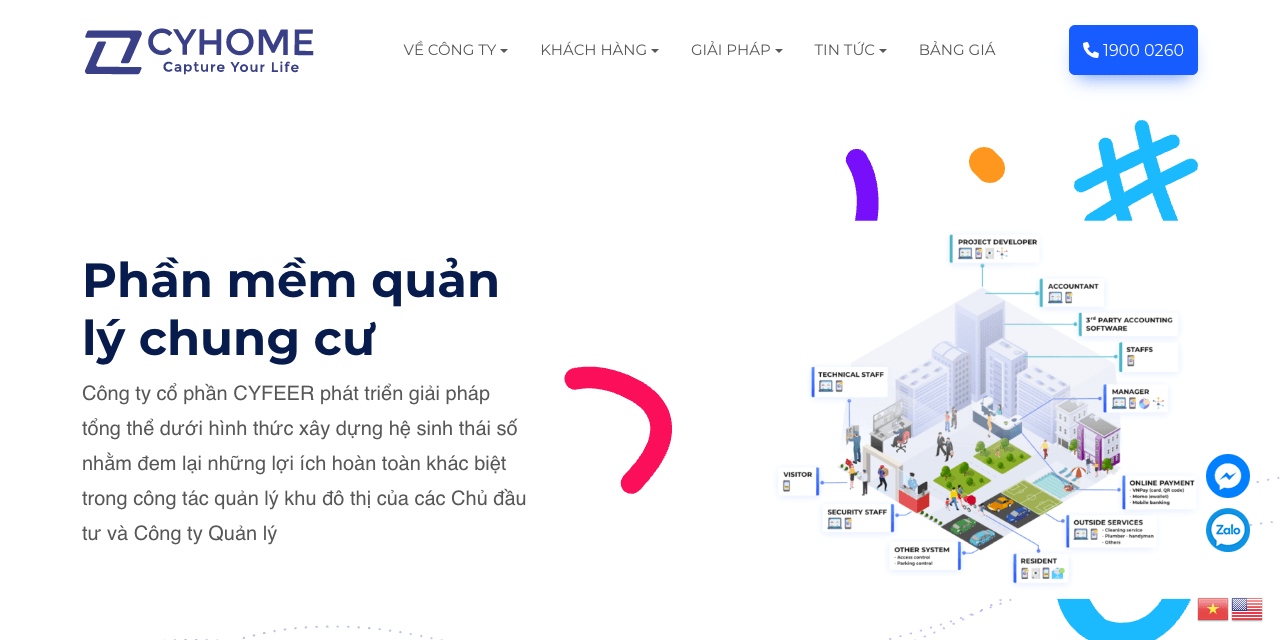
CyHome Alternative: Hausive
A planned head-to-head comparison of CyHome and Hausive for Vietnam property managers, covering building operations, resident communication, billing, maintenance, reporting, and why Hausive is better.
- Property Management
- Vietnam