

Tenant Management Software: What It Does, What It Costs, and Which Platform Fits Your Portfolio
Tenant turnover costs landlords $1,750–$3,872 per vacancy. The most effective retention tool isn't rent freezes or gifts — it's fast maintenance responses and clear communication. Here's how tenant management software delivers both.

Tenant turnover costs landlords between $1,750 and $3,872 per vacancy — factoring in lost rent, cleaning, repairs, re-listing, and screening (Coastline Equity, 2024). That’s equivalent to one to three months of rent on an average unit, gone each time a tenancy ends. The national average turnover rate sits around 45%, meaning roughly half of rental units churn every year.
Tenant management software doesn’t eliminate turnover — but it addresses the two most common reasons tenants leave: slow maintenance responses and poor communication. Properties that respond quickly to maintenance requests see a 20% increase in overall tenant satisfaction (Revolution Rental Management, 2024). Tenants who feel heard stay longer. Software makes it operationally feasible to be responsive even when you’re managing multiple properties without a full-time assistant.
Key Takeaways
- Tenant turnover costs $1,750–$3,872 per vacancy; 54.1% of renters renewed leases in October 2024, the highest rate since 2021
- Fast maintenance response drives a 20% increase in tenant satisfaction and significantly improves lease renewal rates
- Free platforms (TurboTenant, Avail) cover all core tenant management functions for landlords with 1–20 units
- Paid upgrades ($9–$30/mo) add e-signing, automated workflows, and priority screening
What Tenant Management Software Actually Does
Tenant management software is the operational layer between a landlord and their tenants — distinct from pure accounting tools (Stessa, REI Hub) and from enterprise property management platforms (AppFolio, Yardi). It covers the recurring workflow of an active tenancy:
Tenant portals give tenants a self-service interface to pay rent, submit maintenance requests, access lease documents, and communicate with the landlord. The portal eliminates the “where do I send rent?” and “can you remind me what my lease says?” conversations that eat landlord time.
Maintenance ticketing converts informal repair requests (WhatsApp messages, voicemails) into tracked tickets with a status, timeline, and photo attachment. Without tracking, maintenance requests get lost. With it, you have a documented record of every issue reported and resolved — useful for security deposit disputes and for demonstrating responsiveness.
Lease management covers generating, e-signing, storing, and renewing leases. E-signing removes the logistics of in-person signings. Renewal reminders prevent the 90-day scramble when you realize a lease expires next month.
Communication logging keeps a record of every message between landlord and tenant — critical if a dispute escalates to a formal proceeding. A signed lease plus a communication log is the paper trail that protects both sides.
For full financial tracking alongside tenant management
Source: Industry aggregate (Coastline Equity, Innago, Zego, 2024). Totals vary by market and property type: $1,750–$3,872 average range.
The Best Tenant Management Software for Landlords in 2026
1. TurboTenant — Best Free All-in-One for Small Landlords
TurboTenant is free for landlords across all core tenant management functions — rent collection, maintenance requests, lease storage, and tenant communication. It’s one of the most widely used platforms among independent landlords, and the reason is simple: it does more for free than most paid competitors.
Why it’s great: The tenant portal is genuinely tenant-friendly, which matters for adoption. A portal your tenants won’t use doesn’t help you. TurboTenant’s mobile app (iOS and Android) handles landlord tasks on the go; Avail, by comparison, lacks a landlord mobile app. Maintenance request tracking includes photo attachments and status updates — tenants can see whether their request has been acknowledged, in progress, or completed.
Best for: US-based landlords managing 1–20 units who want a full tenant management workflow at zero cost.
Key feature: Prebuilt, state-specific lease templates with e-signing — landlords in the US don’t need a lawyer to generate a compliant lease for their state.
Pricing: Free for landlords (tenant pays $2/ACH or 3.49% card). Pro at $9.92/mo and Premium at $12.42/mo add waived ACH fees, lease auto-fill, and premium screening.
2. Avail — Best for Lease Management and Document Organization
Avail (by Realtor.com) has the strongest lease management suite of any free platform. State-specific, lawyer-reviewed lease templates are available on the free Unlimited tier — generating a lease in Avail takes under 10 minutes and produces a document that’s compliant with the landlord-tenant law of the relevant US state.
Why it’s great: The Unlimited Plus tier ($9/unit/month) adds automatic rent reminders, waived ACH fees, and next-day rent disbursement — converting to a near-automated collection workflow. The document storage is well-organized: leases, addenda, inspection reports, and maintenance photos all attach to the relevant unit and tenancy record.
Best for: Landlords who prioritize lease compliance and document management over mobile access or advanced reporting.
Key feature: State-specific lease templates reviewed by legal counsel — reduces the most common liability exposure for self-managing landlords.
Pricing: Free (Unlimited tier, all core features). Unlimited Plus at $9/unit/month adds fast payments, automated reminders, and waived fees.
3. RentRedi — Best Mobile Experience for Active Managers
RentRedi is built around its mobile app — both the landlord and tenant side are genuinely designed for phone use, not desktop-first with a mobile afterthought. The maintenance workflow is particularly well-designed: tenants submit requests with photos from their phone, landlords receive push notifications, and the status updates keep both sides informed without a single phone call or text.
Why it’s great: The prequalification tool (free for tenants to complete) filters out unqualified applicants before they reach the formal application stage — saving time on screening. The platform also integrates with TransUnion’s credit and background check service directly.
Best for: Active landlords who manage from their phones and want the strongest mobile maintenance workflow.
Limitation: No free tier. Cost is $29.95/month (monthly) or ~$12/month (annual). For a landlord with 1–2 units, that cost-per-unit is high relative to TurboTenant or Avail.
Pricing: $12/month (annual) or $29.95/month (monthly). No per-unit pricing — unlimited units on one plan.

Photo by Unsplash
4. Landlord Studio — Best for Combining Accounting and Tenant Management
Most platforms on this list are tenant management tools with light accounting. Landlord Studio reverses that balance — it’s the most accounting-complete of the tenant-management-focused tools, with per-property P&L, receipt scanning, and bank sync alongside the tenant portal and maintenance tracking.
Why it’s great: If you want one tool rather than two (a dedicated accounting tool plus a tenant management tool), Landlord Studio is the strongest option. The free GO plan covers up to 3 units; paid plans scale at $1/unit/month above the base fee, making it affordable for small portfolios.
Best for: Landlords who want accounting and tenant management in a single platform without paying for an enterprise PM suite.
Key feature: Receipt scanning via mobile camera, auto-categorized to the correct property and expense type — matches transactions to tenant ledgers without manual entry.
Pricing: Free (up to 3 units, GO plan). From $12/month base + $1/unit/month on paid plans.
5. Hausive — Best for Vietnam and International Landlords
The platforms above are built for US-based landlords: US bank ACH, USD, state-specific lease law, and English-language tenant interfaces. Landlords managing properties in Vietnam or Southeast Asia operate in a different legal and operational context — one these tools can’t address.
Hausive covers the core tenant-management workflow — maintenance requests, lease records, communication logging, and VND billing — with EN/VI product language for Vietnam operators. For mixed Vietnamese and expat portfolios, the localized landlord workspace matters without claiming a tenant portal or automated lease generation that isn’t shipped.
Best for: Landlords in Vietnam managing residential portfolios of any size, especially mixed Vietnamese/expat tenant bases.
Key feature: EN/VI landlord workspace with VND rent invoicing, utility billing, and maintenance request tracking built for the local context.
Pricing: Starter at $29/month (up to 20 units), Pro at $99/month (up to 100 units).
See how Hausive compares to other Vietnam PM tools
Platform Comparison at a Glance
| Platform | Free Tier | Entry Paid | Mobile App | E-Signing | Maintenance | Best For |
|---|---|---|---|---|---|---|
| TurboTenant | ✅ Full | $9.92/mo | ✅ Yes | ✅ Yes | ✅ Yes | Free all-in-one |
| Avail | ✅ Full | $9/unit/mo | ❌ No landlord app | ✅ Yes | ✅ Yes | Lease management |
| RentRedi | ❌ No | $12/mo (annual) | ✅ Best-in-class | ✅ Yes | ✅ Yes | Mobile-first |
| Landlord Studio | ✅ 3 units | $12+/mo | ✅ Yes | ✅ Yes | ✅ Yes | Accounting + tenants |
| Hausive | — | $29/mo | ✅ Yes | ✅ Yes | ✅ Yes | Vietnam/international |
How to Choose: The Decision Framework
Start with free. TurboTenant and Avail both provide genuinely complete tenant management on their free tiers. Don’t pay for software until you’ve hit a specific limitation — a feature you need that isn’t available, or a volume that makes per-unit costs worthwhile.
Upgrade based on the friction point. If your main pain is lease generation → Avail Unlimited Plus. If it’s ACH fees eating into margins → TurboTenant Premium (waives them at $12.42/mo). If it’s maintenance communication chaos → RentRedi’s mobile workflow. If it’s accounting + tenant management in one → Landlord Studio paid tier.
Match the tool to your market. US platforms don’t work for Vietnam. ACH doesn’t work for VND. State-specific lease templates don’t apply to Vietnamese housing law. If you’re managing internationally, the tool needs to be built for that context — Hausive is the purpose-built option for Vietnam.
Our finding: The most underused feature in every tenant management platform is the maintenance photo log. Most tenants upload a photo when submitting a request; most landlords don’t require one. Making photo documentation mandatory at request submission (and at completion) creates the audit trail that protects landlords in security deposit disputes — the single most common source of post-tenancy conflict.
Frequently Asked Questions
What is tenant management software?
Tenant management software is a platform that handles the operational relationship between a landlord and their tenants: rent collection, maintenance requests, lease storage, communication, and renewal workflows. It’s distinct from pure accounting tools (which focus on bookkeeping) and enterprise property management suites (which include leasing, marketing, and trust accounting for large portfolios).
Is free tenant management software good enough for small landlords?
Yes — for most landlords managing 1–20 units, TurboTenant or Avail’s free tiers cover every core function. The paid tiers add convenience features (waived fees, faster payments, advanced screening) rather than fundamentally different capabilities. Start free and upgrade when a specific feature justifies the cost.
How does tenant management software reduce vacancy?
Primarily through retention. Faster maintenance responses and clearer communication are the two most cited factors in tenant renewal decisions. A platform that tracks maintenance requests, sends automated reminders before lease expiry, and provides tenants a self-service portal for documents and payments removes the friction points that cause good tenants to leave. Tenant turnover costs $1,750–$3,872 per vacancy (Coastline Equity, 2024) — retention is the highest-ROI activity in rental management.
Can I use US-based tenant management software for properties in Vietnam?
Not effectively. US platforms are built around ACH payments (US bank accounts required), USD billing, state-specific lease law, and English-language interfaces. None of these work for Vietnam landlords collecting VND, complying with Vietnamese housing law, or managing Vietnamese-speaking tenants. Hausive is purpose-built for the Vietnam market.
Does tenant management software handle eviction documentation?
Indirectly. Most platforms don’t file eviction paperwork, but they generate the documentation record that supports an eviction filing: signed leases, payment history, maintenance logs, and communication records. TurboTenant, Avail, and RentRedi all produce exportable reports that can be used as evidence in landlord-tenant proceedings.
The Bottom Line
The business case for tenant management software is the same regardless of portfolio size: tenant turnover costs more than software does. A single prevented turnover — worth $1,750–$3,872 — more than justifies a year of any platform on this list, including the paid tiers.
Start with TurboTenant or Avail on their free plans. The critical configuration steps are: enroll tenants in the workflow at lease signing, set up maintenance request tracking with mandatory photo attachments, and enable lease renewal reminders 90 days before expiry. Those three workflows, running consistently, address the most common retention failure points.
For Vietnam-based portfolios, Hausive delivers the same workflow in a context that actually matches the local market.
Ready to automate rent collection too?
Continue Reading
Operations:
- Online Rent Collection: How to Automate Payments and Stop Chasing Late Rent
- Property Management Operations Guide for Vietnam Landlords
Leasing:
Finance:

Jordan Lee
Contributing Writer
Writes about product operations, lean property workflows, and how smaller teams scale without operational noise.
Related articles

Online Rent Collection: How to Automate Payments and Stop Chasing Late Rent
64% of online rent invoices are paid on time. Only 30% of cash and check invoices are. That gap — more than 2x — is what automated rent collection is actually worth to a landlord.
- Property Management
- Rent Collection
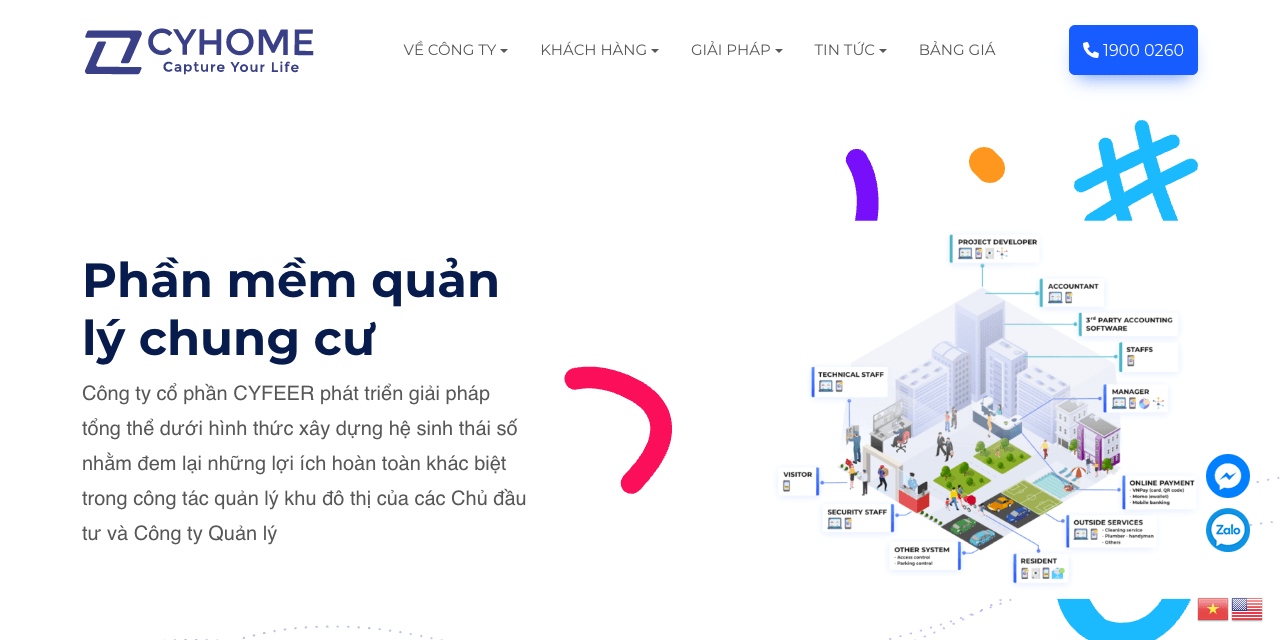
CyHome Alternative: Hausive
A planned head-to-head comparison of CyHome and Hausive for Vietnam property managers, covering building operations, resident communication, billing, maintenance, reporting, and why Hausive is better.
- Property Management
- Vietnam