

Vietnam Rental Income Tax: A Landlord's Calculation Guide for 2025 and 2026
The exact formulas, thresholds, and filing deadlines for Vietnam rental income tax — including the major 2026 reform that exempts most HCMC landlords earning below VND 41.7M/month.

Vietnam’s rental income tax isn’t complicated — but a lot of landlords are calculating it wrong, and the rules changed significantly for 2026. If you collect rent in Ho Chi Minh City or anywhere in Vietnam, you face up to three tax obligations: Personal Income Tax (PIT), Value-Added Tax (VAT), and a Business License Tax that’s now being phased out. Get the calculation wrong and you’re looking at a 0.03% daily late-payment penalty plus a 20% administrative fine on any shortfall.
This guide walks through the exact formulas, the 2026 threshold changes that exempt most mid-range landlords entirely, and the filing process — whether you’re Vietnamese or a foreign owner.
TL;DR: In 2025, rental income above VND 100M/year (~$4,000) is taxed at 10% total — 5% VAT plus 5% PIT on total revenue. From July 1, 2026, the threshold rises to VND 500M/year (~$20,000), and PIT applies only to the amount above that level. Late payment incurs 0.03%/day; incorrect declarations trigger a 20% flat fine (Vietnam Briefing, 2025).
What Taxes Do Landlords Pay on Rental Income in Vietnam?
Three separate taxes apply to rental income in Vietnam, though one disappears from 2026. The main two are Personal Income Tax (PIT) and Value-Added Tax (VAT), each charged at a flat 5% on rental revenue above the applicable threshold (Vietnam Briefing, 2025). They’re calculated independently, so the combined effective rate hits 10% once you’re over the threshold.
The third — Business License Tax (BLT) — was a modest annual fee that topped out at VND 1,000,000 (~$40) for high-income landlords. Starting January 1, 2026, BLT is exempt for rental income entirely.
| Tax | Rate | Basis for calculation |
|---|---|---|
| Personal Income Tax (PIT) | 5% | Total revenue (2025) / Excess above VND 500M (from July 2026) |
| Value-Added Tax (VAT) | 5% | Total revenue once threshold exceeded |
| Business License Tax (BLT) | VND 300K–1M/year | Annual income tier — exempt from Jan 2026 |
Vietnamese and foreign landlords face identical obligations. There’s no reduced rate or exemption for expat owners — the same 5%+5% structure applies regardless of nationality (Vietnam Briefing, 2025).
What Is the Tax-Free Threshold — and How Does 2026 Change It?
The threshold is the annual rental revenue below which you owe nothing. In 2025, that number is VND 100 million per year — roughly $4,000, or about VND 8.3M/month. Exceed it and both VAT and PIT apply to your full annual revenue from the first đồng, not just the excess (vietnam.vn, 2025).
From July 1, 2026, Vietnam’s amended Personal Income Tax Law No. 109/2025/QH15 raises the threshold to VND 500 million per year — roughly $20,000, or VND 41.7M/month. Below this, neither VAT nor PIT applies (vietnam.vn, 2026).
What this means practically: a landlord with one HCMC apartment at VND 30M/month collects VND 360M/year. In 2025, they pay VND 36M in tax. From July 2026, the same landlord pays zero.
Our calculation: Under 2025 rules, a landlord at VND 25M/month (VND 300M/year) owes VND 30M/year in tax — 10% of gross income. Under 2026 rules from July 1, the same property owes VND 0. The reform effectively exempts the entire sub-VND 41.7M/month rental market from income tax.
How to Calculate Rental Income Tax in 2025 — Step by Step
The 2025 formula is simple: exceed VND 100M/year and both VAT and PIT apply to your full annual revenue — not just the portion above the threshold.
Step 1 — Total all rental income received in the calendar year across all properties.
Step 2 — Check if the total exceeds VND 100,000,000. If not, you owe nothing.
Step 3 — Apply 5% VAT to total revenue.
Step 4 — Apply 5% PIT to total revenue.
Step 5 — Add BLT: VND 300K (100–300M tier), VND 500K (300–500M), or VND 1M (above 500M). First year exempt; BLT exempt entirely from 2026.
Worked Example A — Mid-range HCMC apartment:
- Monthly rent: VND 15,000,000 → Annual: VND 180,000,000
- Exceeds threshold → taxable in full
- VAT: VND 180M × 5% = VND 9,000,000
- PIT: VND 180M × 5% = VND 9,000,000
- BLT: VND 300,000 (100–300M tier)
- Total: VND 18,300,000/year (~10.2% effective rate, ~VND 1.5M/month)
Worked Example B — D3 two-bedroom:
- Monthly rent: VND 35,000,000 → Annual: VND 420,000,000
- VAT: VND 420M × 5% = VND 21,000,000
- PIT: VND 420M × 5% = VND 21,000,000
- BLT: VND 500,000
- Total: VND 42,500,000/year (~10.1% effective rate, ~VND 3.5M/month)
What Changes Under the 2026 Tax Rules?
The 2026 reform introduces an important asymmetry between VAT and PIT once you’re above the VND 500M threshold. They no longer calculate the same way.
VAT (from July 1, 2026): Still calculated on total annual revenue. A landlord earning VND 600M/year pays VAT on the full VND 600M at 5% = VND 30M.
PIT (from July 1, 2026): Calculated only on revenue exceeding VND 500M. Same landlord: PIT applies to VND 100M at 5% = VND 5M.
The practical result is that the effective combined rate starts at roughly 5.8% the moment you cross VND 500M — not 10% — then climbs gradually. A landlord at VND 600M/year pays 5.8% combined; at VND 960M they pay 7.4%. You only approach 10% at very high income levels. This is materially more generous than the 2025 flat 10% on all income above VND 100M (vietnam.vn, 2026).
Worked Example C — Premium expat apartment (2026 rules, from July 1):
- Monthly rent: VND 50,000,000 → Annual: VND 600,000,000
- Exceeds VND 500M threshold
- VAT: VND 600M × 5% = VND 30,000,000 (on total revenue)
- PIT: (VND 600M − VND 500M) × 5% = VND 5,000,000 (on excess only)
- BLT: exempt
- Total: VND 35,000,000/year (5.8% effective rate — down from VND 60M under 2025 rules)
Worked Example D — Same D3 apartment as Example B (2026 rules):
- Monthly rent: VND 35,000,000 → Annual: VND 420,000,000
- Below VND 500M threshold → neither VAT nor PIT applies
- BLT: exempt
- Total: VND 0 — down from VND 42,500,000/year in 2025
The transitional 2026 period: Old rules apply January–June 2026. New rules begin July 1. For annual filers, implementation circulars are expected to clarify the proportional calculation for the split year (Acclime Vietnam, 2026).
How Do Landlords File Rental Income Tax in Vietnam?
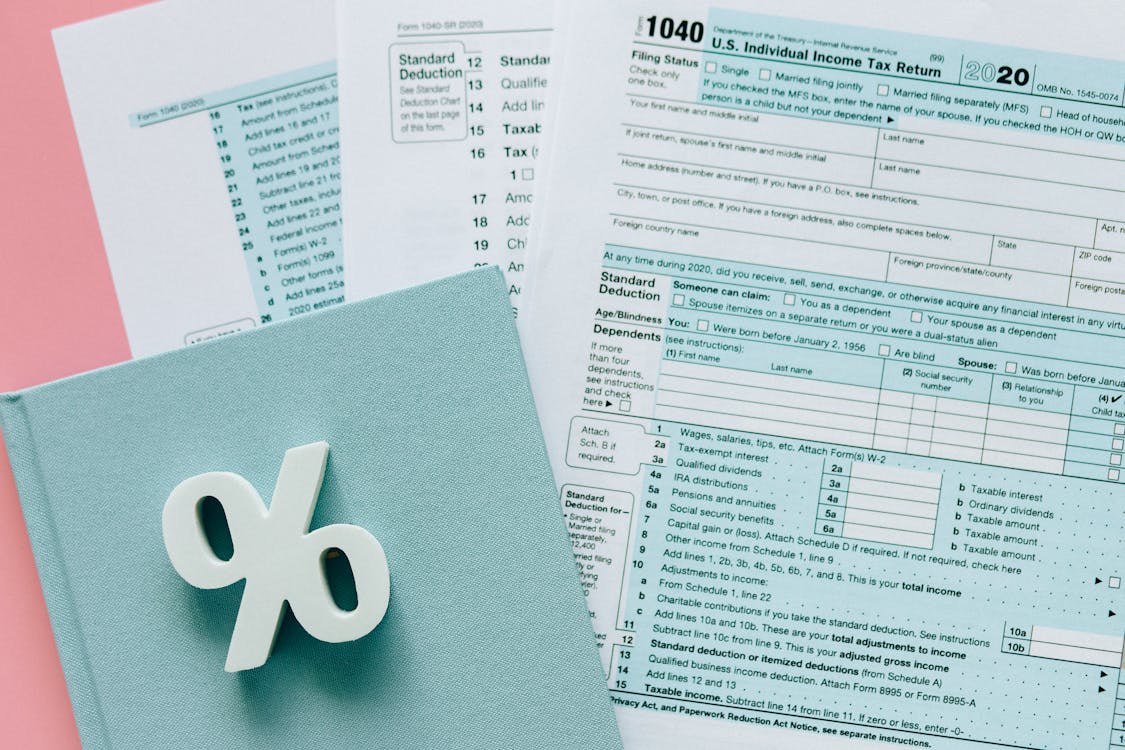
Vietnamese and foreign landlords file using Form 01/TTS through Vietnam’s online tax portal at thuedientu.gdt.gov.vn. The portal is primarily Vietnamese-language — foreign landlords typically engage a local accountant or licensed tax representative (Vietnam Briefing, 2025).
Two filing approaches:
Option 1 — Per-payment filing: Submit a declaration within 10 days of receiving each rental payment. Monthly rent means 12 declarations per year. Few individual landlords use this approach.
Option 2 — Annual filing: One declaration covering the full calendar year, due by January 31 of the following year. This is standard for landlords with one or two properties.
One thing most landlords don’t realize: declarations are filed per property address, not as one combined return. If you own two apartments in different districts, you file two separate returns (vietnam.vn, 2025).
Registration steps for first-time filers (including foreigners):
- Visit the district tax office (Cục Thuế) for the property’s location
- Bring: passport or CCCD, signed lease agreement, property ownership documents
- Obtain a Vietnamese tax code (mã số thuế)
- Register for online portal access to submit Form 01/TTS
What Are the Penalties for Late or Incorrect Filing?
Vietnam’s penalty structure is moderate but compounds fast. Two types apply directly to landlords.
Late payment: 0.03% per day on the unpaid tax. That’s 0.9% after 30 days, 2.7% after 90 days, and 5.4% after 180 days — on top of the tax you already owe (Andersen Vietnam Tax Booklet 2025).
Underpayment: A flat 20% administrative fine on the shortfall amount. Declare VND 10M owed when you actually owed VND 15M, and the VND 5M difference triggers a VND 1M fine — plus daily interest from the original due date.
Tax advisors in HCMC flag the same filing mistake repeatedly: landlords whose tenants pay quarterly or annually in advance miscalculate the trigger date. They treat payment receipt as the filing deadline, when in fact the 10-day clock starts the moment payment is received. Annual filing by January 31 sidesteps this problem entirely for most landlords.
The underpayment fine and the late-payment penalty aren’t mutually exclusive. An incorrect annual declaration filed on time can still trigger the 20% underpayment fine plus daily interest from the original payment due date. Most residential rental tax disputes in Vietnam trace back to misclassifying the income year for advance rent.

Frequently Asked Questions
Do foreign landlords pay the same rental income tax rate as Vietnamese landlords?
Yes. Foreign property owners face identical obligations — 5% VAT and 5% PIT on rental income above the applicable threshold. There’s no reduced rate or nationality-based exemption. Foreign landlords must register for a Vietnamese tax code at the local district tax office, submitting their passport and property ownership documents (Vietnam Briefing, 2025).
What if I own multiple rental properties in Vietnam?
The VND 100M (2025) or VND 500M (2026) threshold applies to your total combined annual rental income across all properties — not per unit. Filing, however, is done per property: each rental address gets its own declaration. The 2026 PIT deduction of VND 500M can be allocated across multiple contracts, but total deduction across all contracts can’t exceed VND 500M (vietnam.vn, 2026).
When exactly does the VND 500M threshold take effect?
July 1, 2026, under Vietnam’s amended Personal Income Tax Law No. 109/2025/QH15. Business License Tax exemption for rental income already applied from January 1, 2026. For January–June 2026, the old VND 100M threshold still governs (Acclime Vietnam, 2026).
Can landlords deduct maintenance, mortgage, or management fees before calculating tax?
No — under the current flat-rate system, VAT and PIT apply to gross rental revenue with no deductions for operating costs, mortgage interest, depreciation, or management fees. The 5%+5% rate hits your top line. This is one reason net yield calculations for Vietnam properties should always model tax as a percentage of gross income, not net.
What if my lease agreement says the tenant pays the tax?
Some leases state the tenant bears the tax cost or quote rent “net of tax.” This is a valid contractual arrangement between the parties — but it doesn’t change who is legally liable to the Vietnamese tax authority. The landlord is responsible for declaring and remitting tax regardless of what the lease says. Make sure your lease language is explicit about which party bears the tax, to avoid renewal disputes.
How Rental Tax Fits Into Your Net Yield
Vietnam’s rental income tax is a real cost, but it’s not the largest one in your yield calculation. A mid-range HCMC apartment at VND 180M/year paying VND 18M in 2025 tax has a 10% effective tax rate — which sounds high until you factor in the 7–8% annual vacancy typical across the city. One empty month costs more than half a year’s tax bill.
For a full picture of how tax, vacancy, and management costs interact with gross yield in HCMC, start with the Ho Chi Minh City Real Estate Market 2026 and the practical guide on How to Reduce Vacancy in HCMC Rental Properties.
Continue Reading
- Vietnam Rental Yield Calculator
- How to Set Property Management Fees in Vietnam
- How to Screen Tenants for HCMC Apartments
- Tools: Hausive for tracking rental income, tax obligations, and net yield across your portfolio

Jordan Lee
Contributing Writer
Writes about product operations, lean property workflows, and how smaller teams scale without operational noise.
Related articles

How to Set Property Management Fees in Vietnam: Benchmarks, Structures, and Contract Clauses
Property management fees in Vietnam run 6%–10% of monthly rent plus a placement fee of half to one month's rent. Here's how to benchmark, structure, and negotiate every line item.
- Rent Collection
- Reporting

Vietnam Rental Yield Calculator: How to Work Out Gross and Net Yield for HCMC Apartments
HCMC gross rental yields average 4.6% but landlords typically net around 3% once costs are accounted for. This step-by-step guide shows you exactly how to calculate both figures for any Vietnam property.
- Rent Collection
- Reporting